Russia Extended Its Diesel Export Ban to September 30 — Crude Can Fall While Fuel Stays Tight
The world’s second-largest diesel exporter is keeping producers out of overseas markets for another month, separating refined-product tightness from the crude-oil headline.
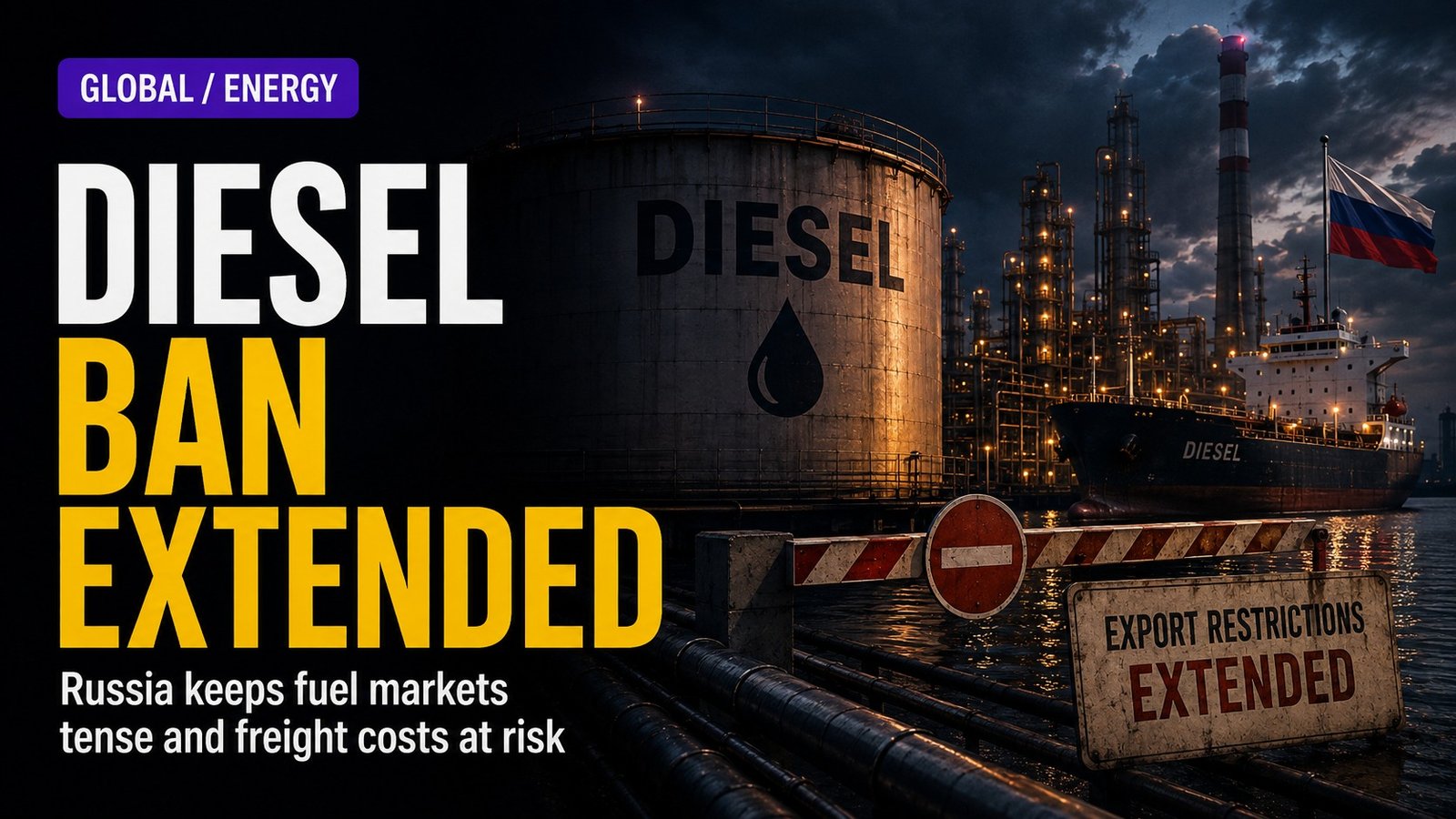
Russia has extended restrictions on exports of diesel, marine fuel and gas oils by direct producers through September 30 as the government tries to stabilise domestic supply after refinery disruptions.
That creates an important market distinction. Crude prices can soften on expectations of future supply, while diesel and other refined products remain tight because damaged or offline refining capacity limits how much usable fuel reaches the market.
WHAT HAPPENED
The Russian government introduced a broad set of fuel-export restrictions in July to support domestic availability. Its original structure was set to exempt direct producers of diesel and related fuels from September 1.
Reuters reported on August 29 that the government has now extended the restriction on exports by producers through September 30. The move follows refinery outages linked to Ukrainian drone attacks and domestic fuel shortages.
WHAT EVERYONE IS WATCHING
Traders will focus on European diesel cracks and whether the ban is lifted after September.
The more important question is refinery throughput. Export policy can redirect barrels, but it cannot instantly replace damaged processing capacity. If refinery availability stays constrained, diesel scarcity can persist even if crude supply is comfortable.
WHAT THE MARKET MAY BE MISSING
Distillates have a different inflation pathway from crude.
Diesel feeds freight, agriculture, construction and industrial activity. A refined-product squeeze can therefore keep transportation and logistics costs elevated even if the broad oil narrative turns bearish.
For markets, this means Brent alone may understate the energy pressure facing businesses and consumers.
THE NUMBERS
• Export restriction for direct Russian producers: extended through September 30 • Products: diesel, marine fuel and gas oils • Russia: typically one of the world’s largest diesel exporters • Policy goal: stabilise domestic fuel availability • Key physical constraint: refinery disruptions and shortages
POSITIVE CASE
Refinery operations recover, domestic inventories rebuild and Russia removes producer restrictions at the end of September. Distillate cracks could then normalise quickly.
DOWNSIDE CASE
Additional refinery attacks or maintenance problems keep output constrained, forcing further extensions and sustaining high diesel margins even if crude prices weaken.
WHAT WOULD CHANGE THE STORY
Russian refinery runs, export flows, diesel inventories, European refining margins and any further government extension will determine the duration of the squeeze.
RELATED THEMES
Diesel, Brent, refining margins, European energy, freight costs, inflation and Russian petroleum exports.
PRICEVIA VIEW
The market often asks whether Russia is exporting oil. The more relevant near-term question is whether it can process and export enough diesel. Refined-product scarcity can tell a very different story from crude.
SOURCES & TIMESTAMP
Russian Government July 30 fuel-export decision and Reuters August 29 update on the September extension, accessed August 30 morning IST.
MARKET-RISK DISCLAIMER
For information and education only; not investment advice. Markets, regulatory outcomes, transaction terms and company guidance can change. Time-sensitive facts should be rechecked before acting.
Related PriceVia analysis

India and China Are Talking Again — The $100 Billion Trade Gap Is Still in the Room
Xi Jinping’s first India visit in seven years signals a diplomatic reset, but record bilateral commerce remains shaped by Indian dependence on Chinese machinery, electronics and industrial inputs.

The India–EU Trade Deal Cleared Another Gate — Ratification Is the Real Finish Line
The European Commission has advanced the agreement toward Council approval and signature, but tariff savings and 2027 implementation still depend on legal completion and ratification.

US Inflation Put a Rate Hike Back on the Table — Bonds Are Already There
August CPI accelerated, real wages fell again and markets priced an 87% chance of a quarter-point hike; the near-5% Treasury yield is tightening conditions before the Fed votes.

India Helped Kill Europe’s 15% Scrap Duty — But the Supply Win May Expire
Brussels abandoned a three-year export levy as an India trade deal nears, yet tougher waste rules could still block direct shipments from May 2027.