India Helped Kill Europe’s 15% Scrap Duty — But the Supply Win May Expire
Brussels abandoned a three-year export levy as an India trade deal nears, yet tougher waste rules could still block direct shipments from May 2027.
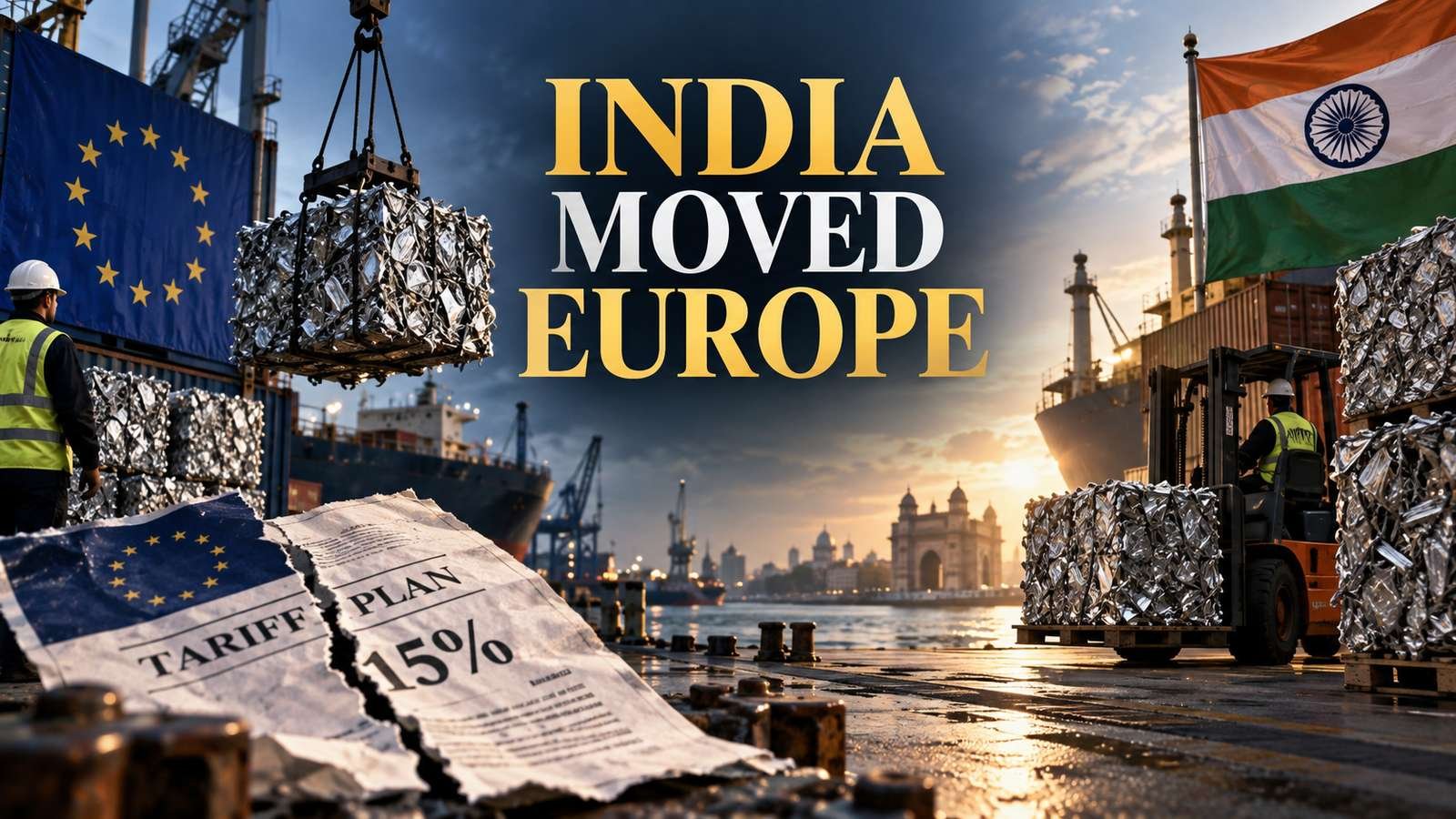
India Helped Kill Europe’s 15% Scrap Duty — But the Supply Win May Expire
**Brussels abandoned a three-year export levy as an India trade deal nears, yet tougher waste rules could still block direct shipments from May 2027.**
*By PriceVia Commodities Desk | Published September 11, 2026 | Updated September 11, 2026*
Why this matters now
Brussels abandoned a three-year export levy as an India trade deal nears, yet tougher waste rules could still block direct shipments from May 2027.
Key points
- The EU dropped a proposed 15% aluminium-scrap export duty that was planned for three years. - India buys about one-third of EU scrap exports, making its exemption central to whether the measure could work. - The overlooked catch is a separate waste rule that may restrict direct exports to India from May 2027.
The numbers
| Metric | Value | Context | |---|---:|---| | Proposed duty | 15% | Abandoned plan | | Industry request | 30% | Higher protection sought | | Planned duration | 3 years | Draft proposal | | India share | ~33% | EU scrap exports | | EU exports | 1.26m tonnes | 2025 record | | Growth since 2019 | 51% | EU scrap exports |
What happened
The European Union abandoned a planned 15% export duty on aluminium scrap after internal concern that it could complicate final signature of an EU-India free-trade agreement. The draft would have lasted three years and exempted 91 countries and territories, including India. [S1, S2] India accounts for roughly one-third of EU aluminium-scrap exports. Total EU shipments rose 51% from 2019 to a record 1.26 million metric tonnes in 2025, while overseas buyers could pay up to 26% more than European domestic prices. [S1, S3]
What everyone is watching
Indian recyclers and metal producers may retain near-term access, but the policy path is not settled. The EU now plans to rely on its Waste Shipment Regulation, creating a different legal route that could prove just as restrictive. European smelter economics remain the pressure point. High energy costs and scarce scrap have already contributed to recycler closures. If waste rules fail to conserve material, industry groups are likely to demand that a trade measure return.
What the market may be missing
PriceVia analysis: India won relief from one mechanism, not permanent certainty. Under the waste regulation, non-hazardous waste exports to non-OECD countries face a ban from May 2027 unless exemptions are granted; India reportedly did not satisfy the draft environmental test for metal waste. The episode also reveals negotiating leverage. Protecting an EU-India trade deal outweighed a narrow industrial measure, but that political priority can reverse if European plant closures accelerate or environmental compliance becomes the dominant argument.
Positive case
The free-trade agreement is signed, environmental compliance improves and Indian buyers preserve access to European scrap. Lower-cost secondary metal supports downstream aluminium products and recycling investment.
Downside case
Waste rules close the route in 2027, exporters find indirect pathways with higher cost, or Brussels revives a levy. European premiums rise and Indian processors face a tighter, more volatile feedstock market.
What would change the story
Watch the December trade-deal timetable, November waste-rule implementation, exemption decisions, EU scrap prices, export volumes and Indian recycling standards. Direct confirmation of India’s eligibility would materially improve supply visibility.
Related stocks and themes
Novelis, Norsk Hydro, Hindalco, aluminium recyclers, EU-India trade, scrap exporters, smelters and circular-economy policy.
How to read it
For metal buyers, model two scenarios: continued direct EU access and a restricted 2027 route. The difference affects feedstock premiums, working capital and utilisation. A policy victory today is not enough to support long-term margins.
PriceVia View
The dropped duty looks like a win for India, but the calendar matters more than the celebration. Without an environmental exemption, a different EU rule can recreate the same supply squeeze in 2027.
Sources and timestamps
- [S1 — Reuters: EU reversal and India’s role](https://www.reuters.com/world/china/eu-dropped-aluminium-scrap-duty-plan-over-india-concerns-sources-say-2026-09-11/) — published 2026-09-11; accessed 2026-09-11T23:20:00+05:30 - [S2 — European Commission: Waste Shipment Regulation](https://environment.ec.europa.eu/topics/waste-and-recycling/waste-shipments_en) — published 2026-09-11; accessed 2026-09-11T23:20:00+05:30 - [S3 — Eurostat: waste and metal trade statistics](https://ec.europa.eu/eurostat/web/waste/database) — published 2026-09-11; accessed 2026-09-11T23:20:00+05:30 - [S4 — European Commission: EU-India trade relations](https://policy.trade.ec.europa.eu/eu-trade-relationships-country-and-region/countries-and-regions/india_en) — published 2026-09-11; accessed 2026-09-11T23:20:00+05:30
Visual disclosure
Hero visual created specifically for this article. Thumbnail text: “INDIA MOVED EUROPE”. It is an editorial illustration, not a market-data screenshot.
Market-risk disclaimer
This article is for market education and information only. It is not investment advice, a recommendation or a promise of returns. Prices, policy decisions, deal terms and forecasts can change; verify the latest primary disclosures and assess risk independently.
- Waste-rule exemptions
- FTA signature
- Scrap premiums
Risk context: This article is for market education and information only. It is not investment advice, a recommendation or a promise of returns. Prices, policy decisions, deal terms and forecasts can change; verify the latest primary disclosures and assess risk independently.
- reuters.com2026-09-11
- environment.ec.europa.eu2026-09-11
- ec.europa.eu2026-09-11
- policy.trade.ec.europa.eu2026-09-11
Related PriceVia analysis
India and China Are Talking Again — The $100 Billion Trade Gap Is Still in the Room
Xi Jinping’s first India visit in seven years signals a diplomatic reset, but record bilateral commerce remains shaped by Indian dependence on Chinese machinery, electronics and industrial inputs.
The India–EU Trade Deal Cleared Another Gate — Ratification Is the Real Finish Line
The European Commission has advanced the agreement toward Council approval and signature, but tariff savings and 2027 implementation still depend on legal completion and ratification.

US Inflation Put a Rate Hike Back on the Table — Bonds Are Already There
August CPI accelerated, real wages fell again and markets priced an 87% chance of a quarter-point hike; the near-5% Treasury yield is tightening conditions before the Fed votes.

Peru’s Exports to India Surged 152% — A Trade Deal Is Finally Nearing the Line
India overtook the US as Peru’s second-largest export destination through July, but gold concentration means the headline growth is less diversified than it appears.