India and China Are Talking Again — The $100 Billion Trade Gap Is Still in the Room
Xi Jinping’s first India visit in seven years signals a diplomatic reset, but record bilateral commerce remains shaped by Indian dependence on Chinese machinery, electronics and industrial inputs.
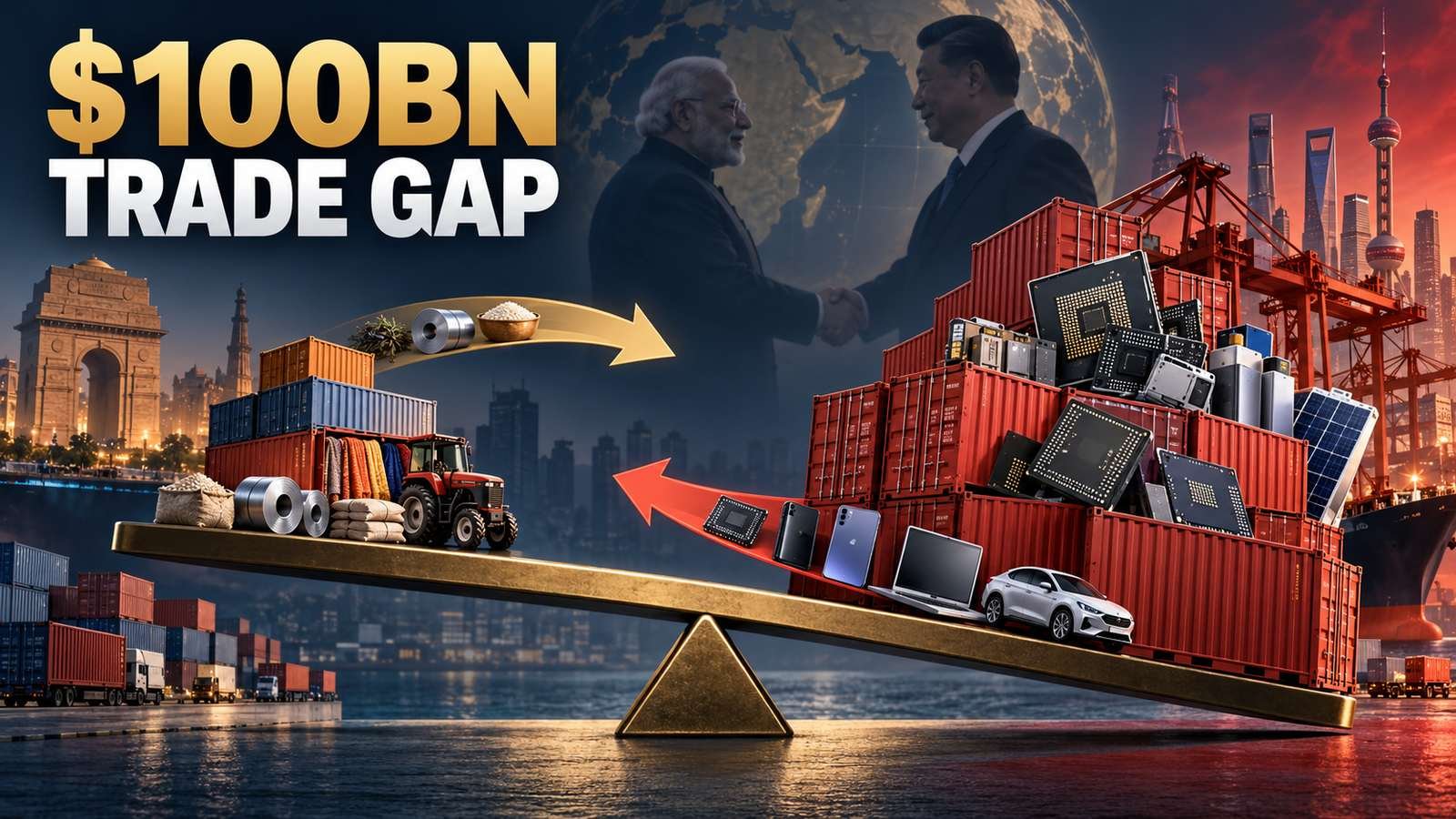
India and China Are Talking Again — The $100 Billion Trade Gap Is Still in the Room
*By PriceVia Economy Desk | Published September 13, 2026 | Updated September 13, 2026*
Why this matters now
Xi Jinping’s first India visit in seven years signals a diplomatic reset, but record bilateral commerce remains shaped by Indian dependence on Chinese machinery, electronics and industrial inputs.
Key points
- Xi Jinping arrived in Delhi for the BRICS summit, his first India visit in seven years. - China–India trade reached about $155.6 billion in 2025, while India’s goods deficit exceeded $100 billion. - A thaw can restore visas, flights and investment, but supply-chain dependence will be harder to rebalance than diplomatic language.
The numbers
| Metric | Value | Context | |---|---:|---| | Bilateral trade | $155.6bn | 2025 | | India imports | ~$132bn | FY2025–26 | | Trade deficit | $100bn+ | India versus China | | Xi visit gap | 7 years | First since prior visit | | Disputed border | ~3,800 km | Approximate | | Relationship shock | 2020 | Deadly border clash |
What happened
Chinese President Xi Jinping arrived in New Delhi for the BRICS summit, his first visit to India in seven years. The trip follows years of tension after the 2020 border clash and is a visible test of whether military disengagement can translate into broader economic normalisation. [S1, S2] Two-way trade reached roughly $155.6 billion in 2025. India imported about $132 billion from China in the 2025–26 fiscal year, leaving a deficit above $100 billion. Electronics, machinery, chemicals and intermediate goods make the imbalance strategically difficult to unwind quickly. [S1, S3]
What everyone is watching
Watch for concrete movement on direct flights, business visas, investment approvals and market access for Indian pharmaceuticals, IT and agriculture. Summit language matters less than signed procedures and customs data. Border stability remains the gating variable. Commercial ties can improve while strategic distrust persists, but a new security incident would quickly reverse corporate planning and political tolerance for Chinese capital.
What the market may be missing
PriceVia analysis: the deficit is partly a competitiveness measure and partly a production input. Restricting Chinese goods without substitute capacity can raise costs for Indian manufacturers that rely on components, delaying rather than accelerating domestic scale. A selective thaw could improve access to capital equipment and technical expertise while India screens sensitive sectors. The policy challenge is distinguishing productive dependence that builds local capability from persistent dependence that prevents it.
Positive case
The summit produces durable border mechanisms, easier travel and calibrated investment approvals. India gains better export access while using Chinese inputs to expand domestic manufacturing and third-country exports.
Downside case
Diplomatic warmth fails to change the deficit, domestic industry faces renewed import pressure or a border setback freezes cooperation. Broad restrictions could raise input costs without creating viable alternatives.
What would change the story
Watch joint statements, flight and visa announcements, foreign-direct-investment approvals, sector-specific market access and monthly customs data. A narrowing deficit driven by stronger Indian exports would be more constructive than one caused by weaker domestic demand.
Verification lens
Measure progress through approvals, logistics and sector-level trade, not summit optics. A better relationship can increase imports before local capacity catches up, so a wider deficit is not automatically evidence of failure.
Related stocks and themes
India–China trade, BRICS, electronics, pharmaceuticals, manufacturing supply chains, border policy, foreign investment and the rupee.
How to read it
Investors should separate beneficiaries of cheaper or reliable inputs from companies exposed to renewed Chinese competition. Policy-sensitive sectors require scenario analysis for both engagement and restriction.
PriceVia View
The visit can reopen doors, but trade arithmetic will judge the reset. India needs a relationship that converts imported inputs into domestic capability and exports, not merely a larger bilateral headline.
Sources and timestamps
- [S1 — Reuters: Xi arrives in Delhi for BRICS summit](https://www.reuters.com/world/china/chinas-xi-lands-delhi-brics-summit-indian-tv-channels-report-2026-09-12/) — published 2026-09-12; accessed 2026-09-13T17:15:00+05:30 - [S2 — India MEA: bilateral and BRICS statements](https://www.mea.gov.in/) — published 2026-09-13; accessed 2026-09-13T17:15:00+05:30 - [S3 — India Department of Commerce: trade statistics](https://tradestat.commerce.gov.in/) — published 2026-09-13; accessed 2026-09-13T17:15:00+05:30 - [S4 — China Customs: trade data](http://english.customs.gov.cn/) — published 2026-09-13; accessed 2026-09-13T17:15:00+05:30
Visual disclosure
Hero visual created specifically for this article. Thumbnail text: “$100BN TRADE GAP”. It is an editorial illustration, not a market-data screenshot.
Market-risk disclaimer
This article is for market education and information only. It is not investment advice, a recommendation or a promise of returns. Prices, policy decisions, deal terms and forecasts can change; verify the latest primary disclosures and assess risk independently.
- Joint statement
- FDI approvals
- Monthly trade gap
Risk context: This article is for market education and information only. It is not investment advice, a recommendation or a promise of returns. Prices, policy decisions, deal terms and forecasts can change; verify the latest primary disclosures and assess risk independently.
- reuters.com2026-09-12
- mea.gov.in2026-09-13
- tradestat.commerce.gov.in2026-09-13
Related PriceVia analysis

Trump Removed Irish Whiskey’s 10% Tariff — Now the Paperwork Must Catch Up
The announcement offers relief to distillers after duties on EU wine and spirits, but exporters still need a formal implementation path and want zero-for-zero treatment across the drinks trade.

India Is Importing Sugar Again — Festival Prices Forced the Door Open
New Delhi allowed one million tonnes of duty-free imports and warned mills to keep supplies adequate after hoarding pushed prices to a record and 20% above levels two months earlier.

The India–EU Trade Deal Cleared Another Gate — Ratification Is the Real Finish Line
The European Commission has advanced the agreement toward Council approval and signature, but tariff savings and 2027 implementation still depend on legal completion and ratification.

US Inflation Put a Rate Hike Back on the Table — Bonds Are Already There
August CPI accelerated, real wages fell again and markets priced an 87% chance of a quarter-point hike; the near-5% Treasury yield is tightening conditions before the Fed votes.