Peru’s Exports to India Surged 152% — A Trade Deal Is Finally Nearing the Line
India overtook the US as Peru’s second-largest export destination through July, but gold concentration means the headline growth is less diversified than it appears.
Peru’s Exports to India Surged 152% — A Trade Deal Is Finally Nearing the Line
**India overtook the US as Peru’s second-largest export destination through July, but gold concentration means the headline growth is less diversified than it appears.**
*By PriceVia Economy Desk | Published September 11, 2026 | Updated September 11, 2026*
Why this matters now
India overtook the US as Peru’s second-largest export destination through July, but gold concentration means the headline growth is less diversified than it appears.
Key points
- Peruvian exports to India reached $6.184 billion in January–July, up 152% year on year. - India became Peru’s second-largest export destination, ahead of the United States at $5.971 billion. - The overlooked risk is concentration: gold drove much of the surge, while the FTA has been under negotiation since 2017.
The numbers
| Metric | Value | Context | |---|---:|---| | Exports to India | $6.184bn | January–July | | Annual growth | 152% | Year on year | | Exports to US | $5.971bn | Same period | | US growth | 21% | Year on year | | FTA talks began | 2017 | First round | | Peru 2026 target | $100bn+ | Total exports |
What happened
Peru’s trade minister said Lima has sent India a counterproposal as free-trade negotiations enter their final stretch, with a signing targeted for 2027. Talks began in 2017, making the latest movement significant but not yet a completed agreement. [S1, S2] Official Peruvian data showed exports to India at $6.184 billion from January through July, up 152% from a year earlier. That put India ahead of the United States, which bought $5.971 billion, though China remains Peru’s largest destination. [S1, S3]
What everyone is watching
The tariff schedule will decide which Indian sectors gain. Peru is a major copper producer, while India needs metals, gold and agricultural supply; Indian pharmaceuticals, vehicles, machinery and services could seek improved access in return. Rules of origin and standards matter as much as headline tariff cuts. Without workable customs procedures, certificate rules and recognition of standards, smaller exporters may not use the agreement even if nominal duties fall.
What the market may be missing
PriceVia analysis: the 152% surge is attention-grabbing but heavily driven by gold. A resilient corridor requires broader goods and services trade so that volumes do not collapse when one commodity price or shipment pattern normalises. The agreement also sits inside a wider tariff reshuffling. Peru is negotiating US duties on agriculture and textiles, while India is diversifying suppliers and export markets. Those pressures can accelerate compromise but also make sensitive sectors harder to settle.
Positive case
Negotiators finalise a balanced agreement in 2027, copper and gold supply becomes more predictable, and Indian manufacturers win access to a growing Pacific market. Logistics and trade finance deepen alongside goods flows.
Downside case
Talks stall again, commodity concentration exaggerates demand and domestic lobbies protect sensitive products. Shipping distance and compliance costs prevent tariff savings from translating into meaningful new business.
What would change the story
Watch India’s response to the counterproposal, a published tariff schedule, rules of origin, services chapters and the signing timetable. Growth outside gold would be the strongest evidence that the corridor is maturing.
Related stocks and themes
Indian refiners, jewellers, copper users, pharmaceuticals, automobiles, logistics, Peru mining, trade finance and Latin America strategy.
How to read it
Investors should map exposure by product, not country headline. Gold refiners and metal users may react first; broader manufacturing benefits require the final text. Until then, the FTA is a catalyst with execution risk rather than booked earnings.
PriceVia View
India has already become too important for Peru to ignore. The missed signal is that a 152% gold-led jump creates urgency for rules, but not proof of a diversified trade relationship.
Sources and timestamps
- [S1 — Reuters: Peru counterproposal and trade data](https://www.reuters.com/world/india/peru-awaits-india-response-trade-talks-near-end-minister-says-2026-09-11/) — published 2026-09-11; accessed 2026-09-11T23:20:00+05:30 - [S2 — India Commerce Ministry: trade agreements](https://commerce.gov.in/international-trade/trade-agreements/) — published 2026-09-11; accessed 2026-09-11T23:20:00+05:30 - [S3 — Peru Ministry of Foreign Trade and Tourism](https://www.gob.pe/mincetur) — published 2026-09-11; accessed 2026-09-11T23:20:00+05:30 - [S4 — UN Comtrade: bilateral goods data](https://comtradeplus.un.org/) — published 2026-09-11; accessed 2026-09-11T23:20:00+05:30
Visual disclosure
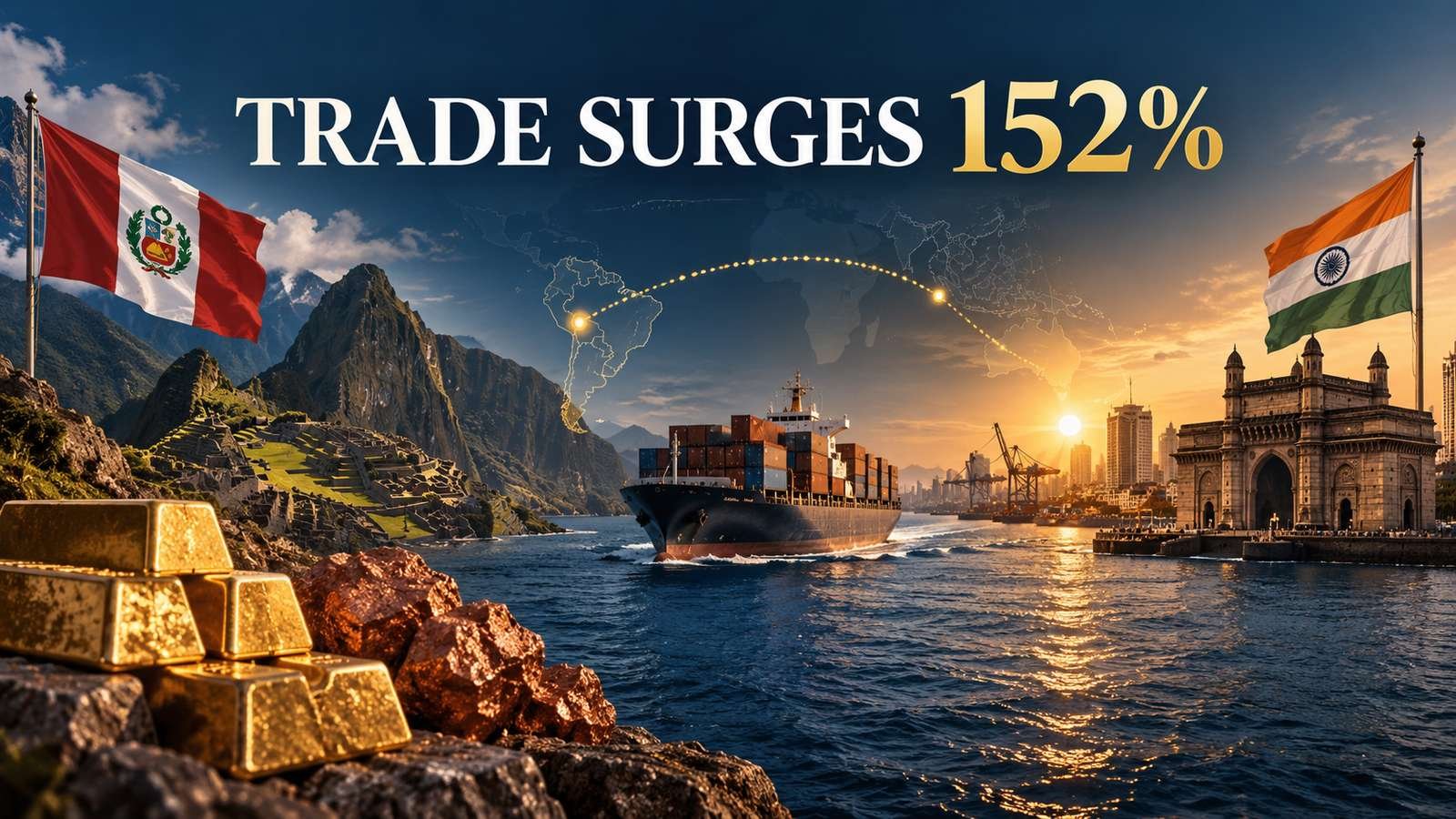
Hero visual created specifically for this article. Thumbnail text: “TRADE SURGES 152%”. It is an editorial illustration, not a market-data screenshot.
Market-risk disclaimer
This article is for market education and information only. It is not investment advice, a recommendation or a promise of returns. Prices, policy decisions, deal terms and forecasts can change; verify the latest primary disclosures and assess risk independently.
- India counterproposal
- Tariff schedule
- Non-gold exports
Risk context: This article is for market education and information only. It is not investment advice, a recommendation or a promise of returns. Prices, policy decisions, deal terms and forecasts can change; verify the latest primary disclosures and assess risk independently.
- reuters.com2026-09-11
- commerce.gov.in2026-09-11
- gob.pe2026-09-11
- comtradeplus.un.org2026-09-11
Related PriceVia analysis
India and China Are Talking Again — The $100 Billion Trade Gap Is Still in the Room
Xi Jinping’s first India visit in seven years signals a diplomatic reset, but record bilateral commerce remains shaped by Indian dependence on Chinese machinery, electronics and industrial inputs.

The India–EU Trade Deal Cleared Another Gate — Ratification Is the Real Finish Line
The European Commission has advanced the agreement toward Council approval and signature, but tariff savings and 2027 implementation still depend on legal completion and ratification.
US Inflation Put a Rate Hike Back on the Table — Bonds Are Already There
August CPI accelerated, real wages fell again and markets priced an 87% chance of a quarter-point hike; the near-5% Treasury yield is tightening conditions before the Fed votes.
India Helped Kill Europe’s 15% Scrap Duty — But the Supply Win May Expire
Brussels abandoned a three-year export levy as an India trade deal nears, yet tougher waste rules could still block direct shipments from May 2027.