India Kept Its BBB Rating — Growth Isn’t the Upgrade Problem
S&P again highlighted India’s policy stability and infrastructure push, but the rating remains capped by fiscal performance, debt and low per-capita income rather than a lack of growth.
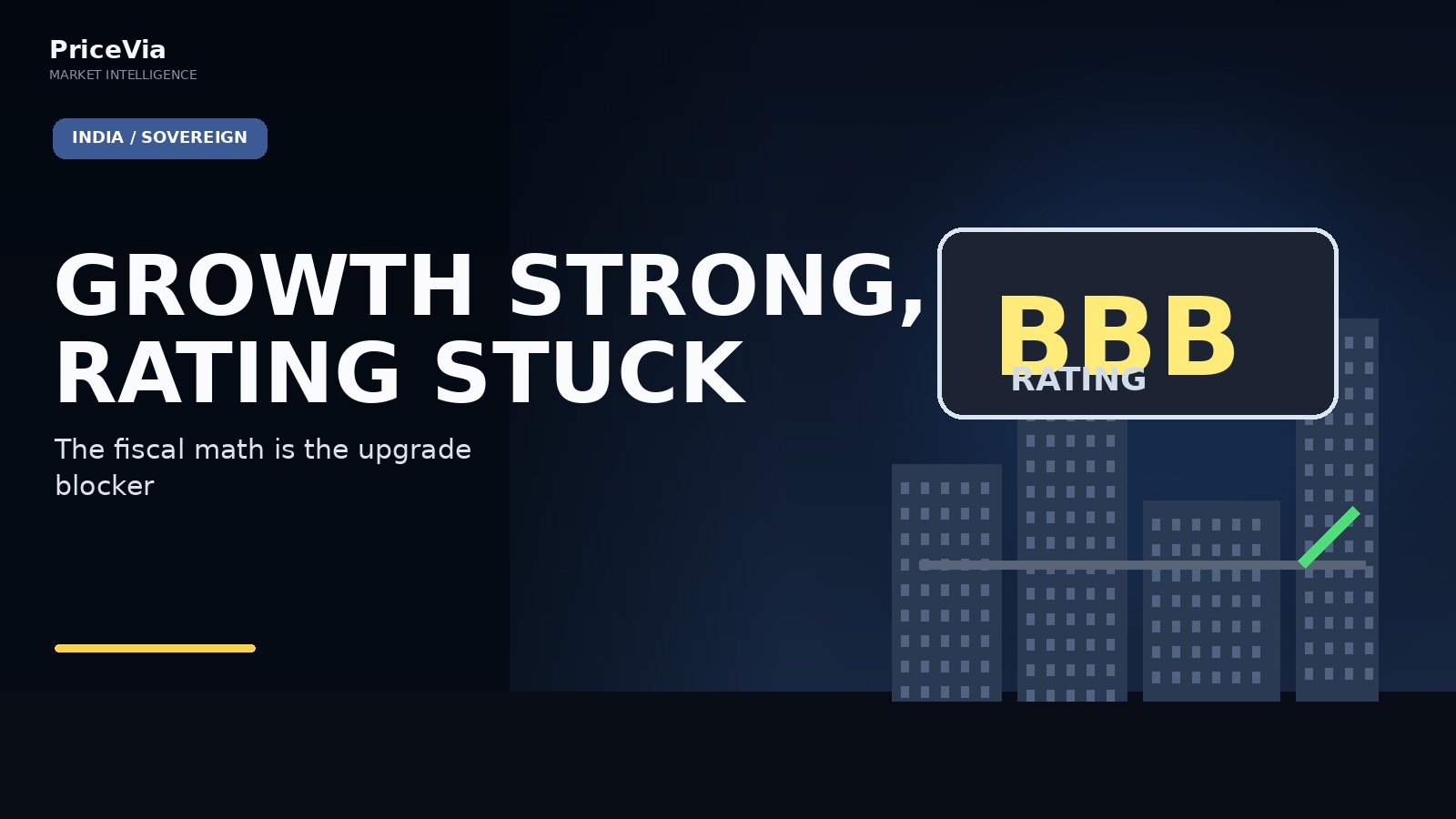
India can grow faster than most major economies and still struggle to earn a higher sovereign credit rating. S&P’s latest decision is a clean example of that disconnect.
The agency affirmed India at BBB/A-2 with a stable outlook, praising policy continuity and heavy infrastructure investment. It still kept the sovereign at the second-lowest investment-grade level because the fiscal balance sheet has not improved enough to match the growth story.
What changed
Nothing changed in the rating itself — and that is precisely why the decision matters.
S&P estimates real GDP growth of about 6.6% in 2026, which it says remains strong relative to most emerging-market peers. The agency also sees infrastructure investment and policy stability supporting long-term growth.
Yet it continues to flag weak fiscal performance, a heavy public-debt burden and low GDP per capita as structural constraints.
The headline versus the signal
A stable rating is reassuring for bond investors because it reduces immediate downgrade risk. But the market should not confuse “stable” with “close to an upgrade.”
India’s rating ceiling is increasingly a public-finance story rather than a growth story.
That matters because sovereign ratings influence the cost of capital, the eligible investor base for debt and the perception of country risk. Faster growth helps by increasing the denominator in debt ratios, but it does not automatically repair deficits or interest burdens.
What most investors may be missing
Infrastructure spending is doing two jobs at once.
It supports potential growth, which ratings agencies like. But unless tax revenue and spending discipline improve sufficiently, large public investment can coexist with a debt burden that remains too high for a higher rating.
The quality of fiscal consolidation therefore matters more than a single year’s deficit target. S&P will be looking for a durable trajectory in which debt and interest costs fall relative to the size of the economy without choking off growth-enhancing investment.
Key numbers
- S&P rating: BBB/A-2 - Outlook: Stable - 2026 growth estimate: 6.6% - Investment-grade position: second-lowest rung - Main structural constraints: fiscal performance, debt and per-capita income
Bull case
Nominal growth remains strong, tax compliance improves and government capital spending crowds in more private investment. If fiscal consolidation continues while growth stays above peers, the rating case strengthens without requiring austerity.
Downside case
Energy shocks widen the current account and inflation, while fiscal deficits remain sticky. Higher borrowing costs can then slow debt improvement even if real GDP growth remains respectable.
What would change the story
Watch the central and state fiscal deficits, interest-to-revenue ratios, debt-to-GDP path, private-capex response and any future language from S&P indicating that fiscal metrics are converging toward higher-rated peers.
Related themes
India sovereign rating, government bonds, rupee, infrastructure, fiscal deficit, debt sustainability and foreign capital.
PriceVia view
India does not need to prove that it can grow. The harder task is proving that fast growth converts into a stronger sovereign balance sheet. That is the bridge between today’s rating and the next one.
Sources & timestamp
S&P Global Ratings action dated August 27, 2026; Reuters sovereign-rating report dated August 27; verified August 28 morning IST.
Market-risk disclaimer
For information only; not investment advice. Credit ratings are opinions and can be revised.
Related PriceVia analysis

Trump Removed Irish Whiskey’s 10% Tariff — Now the Paperwork Must Catch Up
The announcement offers relief to distillers after duties on EU wine and spirits, but exporters still need a formal implementation path and want zero-for-zero treatment across the drinks trade.

India Is Importing Sugar Again — Festival Prices Forced the Door Open
New Delhi allowed one million tonnes of duty-free imports and warned mills to keep supplies adequate after hoarding pushed prices to a record and 20% above levels two months earlier.
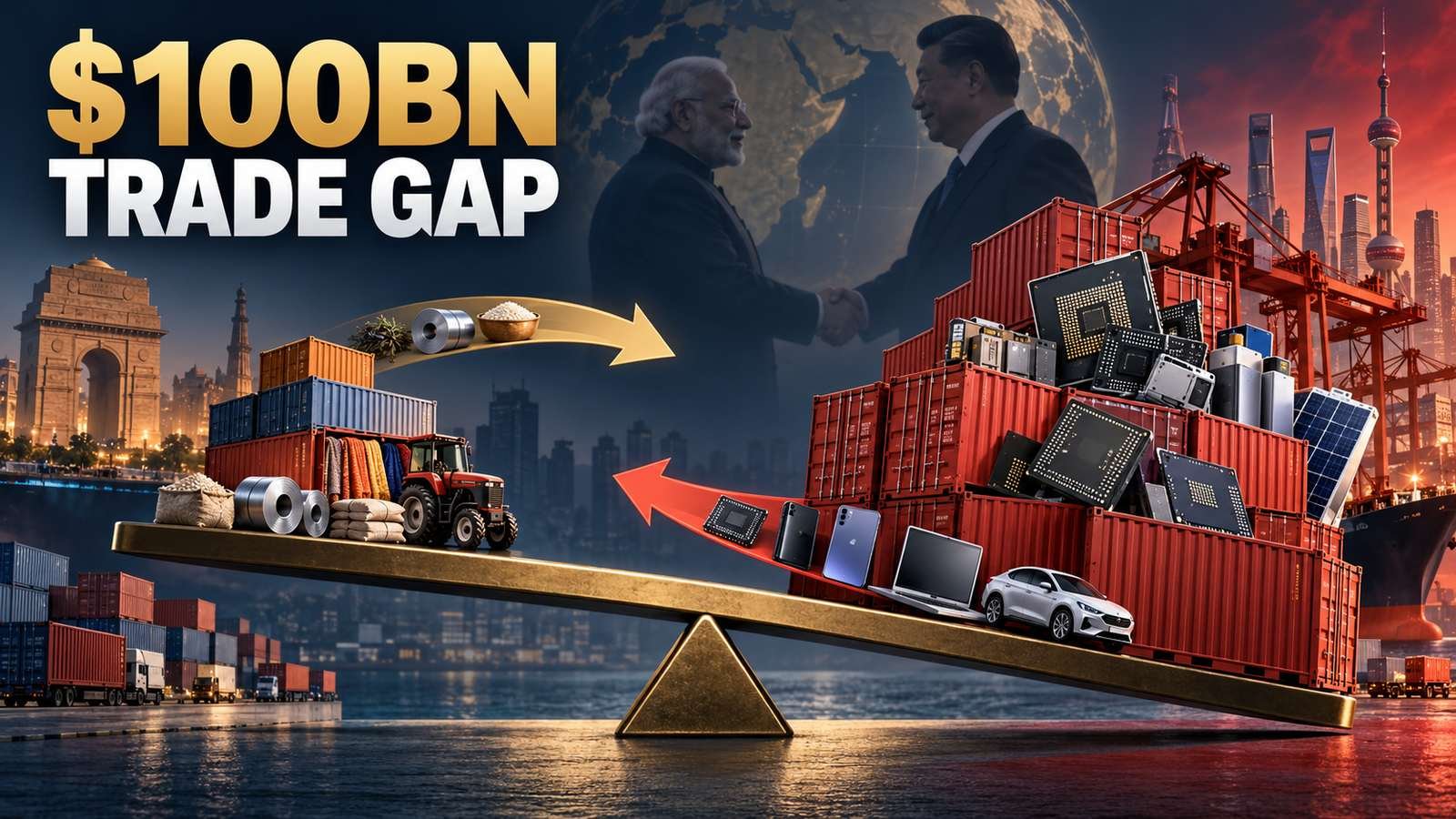
India and China Are Talking Again — The $100 Billion Trade Gap Is Still in the Room
Xi Jinping’s first India visit in seven years signals a diplomatic reset, but record bilateral commerce remains shaped by Indian dependence on Chinese machinery, electronics and industrial inputs.

The India–EU Trade Deal Cleared Another Gate — Ratification Is the Real Finish Line
The European Commission has advanced the agreement toward Council approval and signature, but tariff savings and 2027 implementation still depend on legal completion and ratification.