HDFC Bank’s Next CEO Race Is Down to Two — Continuity Is Only Half the Test
India’s largest private lender has sent two names to RBI ahead of Sashidhar Jagdishan’s October exit, putting succession, integration and board design under one spotlight.
What changed, why it matters, and what most people may be overlooking.
India’s largest private lender has sent two names to RBI ahead of Sashidhar Jagdishan’s October exit, putting succession, integration and board design under one spotlight.
RBI has rejected Tata Sons’ request to surrender its core-investment-company registration, keeping India’s largest unlisted holding company on the path toward a potentially historic market debut.
A record forex inflow left banks with ₹10.25 trillion of surplus cash; the central bank is now using its strongest drain in years while the 10-year yield is already under pressure.
The rupee lost roughly 1% in three sessions after reaching a two-month high, as India’s import bill and near-5% US yields overwhelmed recent intervention support.
The asset manager may hold up to 9.95% in Kotak Mahindra Bank and three other lenders, but the ceiling aggregates funds and does not signal an imminent strategic takeover.
The one-year bond is more than a private fundraise: it shows how new bank-lending limits are pushing proprietary trading firms toward costlier, market-based capital.
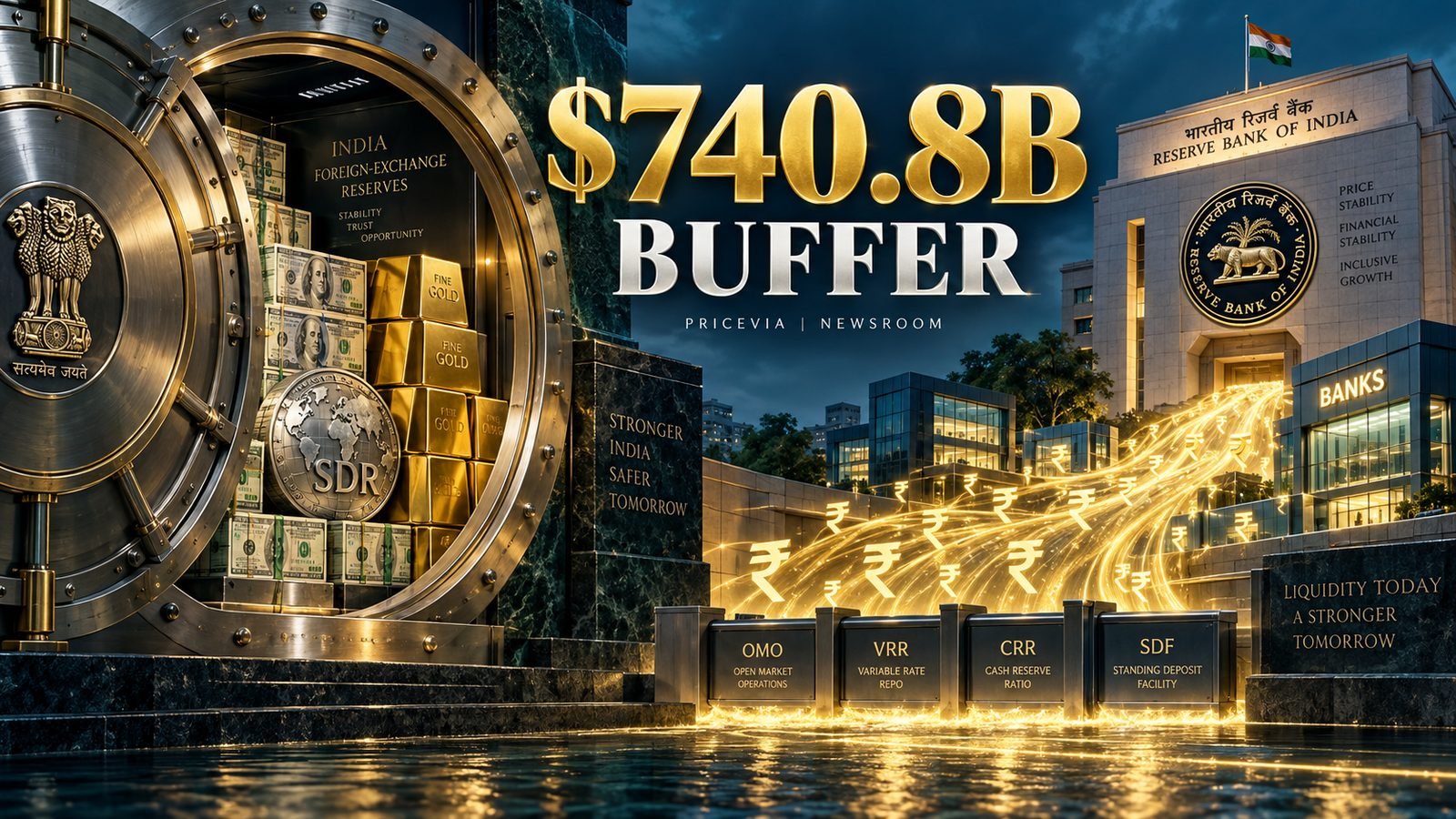
Reserves rose for a ninth week after special dollar-deposit and borrowing schemes attracted more than $136 billion, but the swaps also created record surplus rupee liquidity that RBI must absorb.
The RBI has gained a formidable currency buffer, but these deposits and borrowings are not free reserves: liquidity management and future dollar obligations now matter more.
The external deficit remains modest as a share of GDP, but the way India financed its overseas payments changed sharply in the June quarter.