UPI Can Now Work With a Tap — The QR Code Just Got a Rival
NPCI has added phone-to-terminal payments that can work with little or no connectivity, extending UPI beyond QR scans just as Apple Pay prepares for a wider India launch.
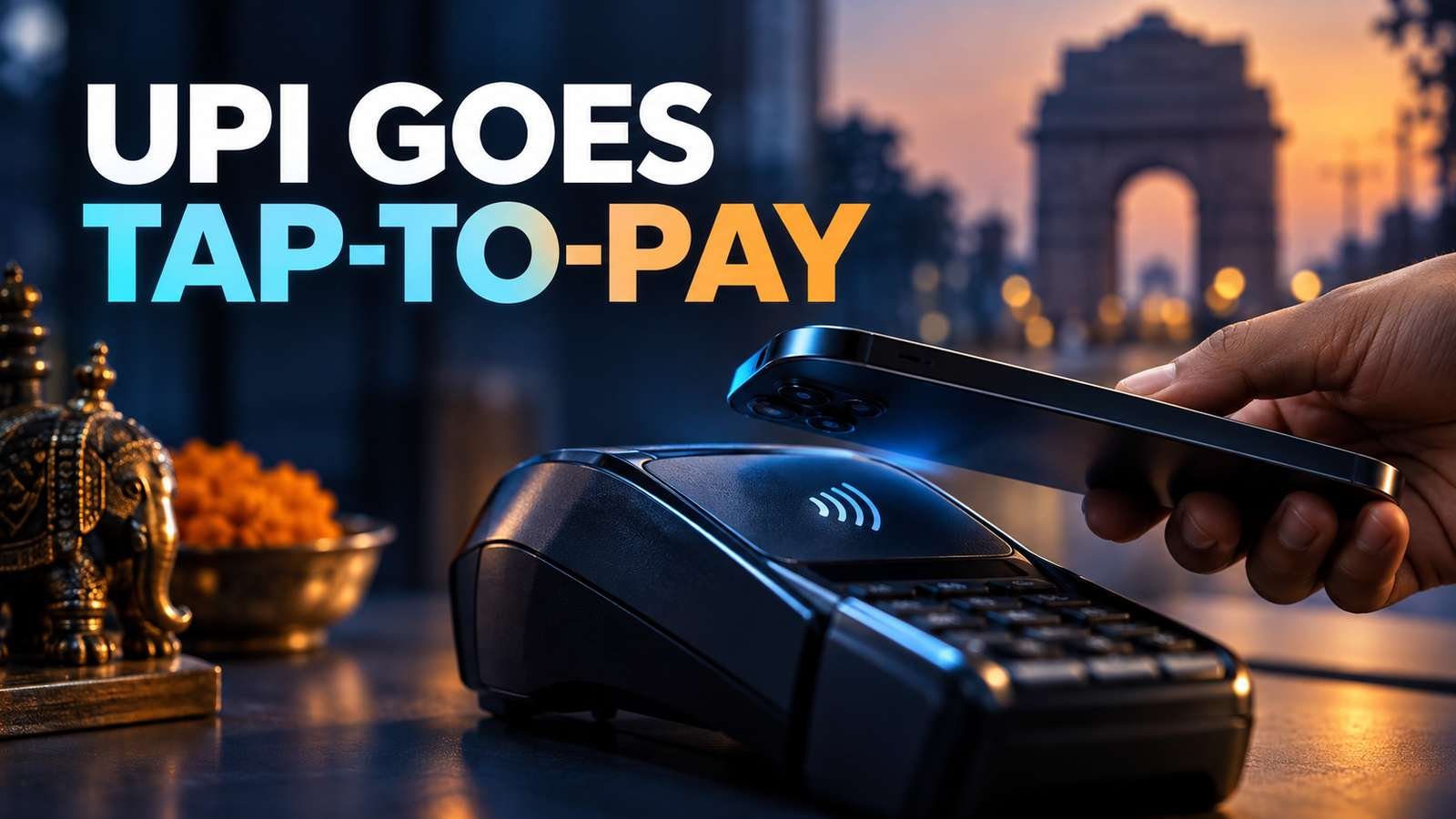
UPI Can Now Work With a Tap — The QR Code Just Got a Rival
*By PriceVia Fintech Desk | Published September 14, 2026 | Updated September 14, 2026*
Why this matters now
NPCI has added phone-to-terminal payments that can work with little or no connectivity, extending UPI beyond QR scans just as Apple Pay prepares for a wider India launch.
Key points
- UPI users can tap a smartphone at a compatible point-of-sale terminal without opening a payment app. - The NFC feature is designed to operate with little or no network connectivity. - August UPI volume reached 24.51 billion transactions worth ₹29.82 trillion, giving the new interface immediate scale.
The numbers
| Metric | Value | Context | |---|---:|---| | August volume | 24.51bn | UPI transactions | | August value | ₹29.82tn | About $314.21bn | | Interaction | One tap | Compatible NFC terminal | | Connectivity | Low or none | Designed capability | | Apple Pay target | October | Reported full launch | | System operator | NPCI | UPI network |
What happened
NPCI launched a tap-and-pay option for UPI at the Global Fintech Fest in Mumbai. A user can tap a compatible smartphone at a point-of-sale terminal without opening the UPI app, using near-field communication. NPCI said the feature is designed for locations with weak or no network connectivity. [S1, S2] The launch enters a network that processed 24.51 billion transactions worth ₹29.82 trillion in August. Reuters reported that a full Apple Pay launch is expected by October after a beta phase, but that timing comes from local-media reports rather than an announced Apple launch date. [S1, S3]
What everyone is watching
Banks and apps must show which devices, terminals, transaction limits and authentication methods are supported. Contactless convenience will matter only if merchant acceptance grows beyond premium retail and failures are handled clearly. The security model is equally important. Offline or low-connectivity flows need spending limits, device protection, replay prevention and quick reconciliation so speed does not create a new fraud path.
What the market may be missing
PriceVia analysis: the strategic shift is from UPI as a QR experience to UPI as the underlying payment rail. If users stop caring which interface triggers a transaction, distribution and device access may become more valuable than app loyalty. Merchant economics could improve when a tap replaces camera scanning at fast checkout, transit or poor-signal locations. Hardware deployment and certification, however, may slow adoption compared with printed QR codes.
Positive case
Compatible terminals spread quickly, payment failures remain low and tap-to-pay captures high-frequency use cases without weakening UPI’s low-cost economics. Indian apps retain the customer relationship even when global wallets arrive.
Downside case
Device coverage is narrow, merchants need expensive upgrades or offline controls create fraud and dispute complexity. Apple Pay and card networks may capture the premium contactless segment before UPI reaches scale.
What would change the story
Watch NPCI’s operating rules, supported banks and phones, terminal deployment, transaction limits, failure rates and Apple’s official India announcement. Real merchant usage is stronger evidence than launch-stage demonstrations.
Related stocks and themes
NPCI, UPI, Apple Pay, Paytm, PhonePe, Google Pay, banks, NFC terminals and offline payments.
How to read it
Fintech investors should track payment success, merchant acceptance and app retention rather than transaction volume alone. The same payment can move through a new interface without creating equivalent new revenue.
Verification discipline
The confirmed facts above come from the cited reporting and primary sources. Readers should re-check supported devices, because that is the clearest next test of whether the present interpretation still holds. Reported plans, proposals and forecasts are labelled as such; they are not treated as completed outcomes.
PriceVia View
UPI’s biggest advantage was that any printed square could become a payment terminal. Tap-to-pay can make checkout faster, but it must preserve that accessibility instead of turning UPI into a hardware-dependent premium feature.
Sources and timestamps
- [S1 — Reuters: India launches UPI tap-and-pay](https://www.reuters.com/world/india/india-launches-tap-and-pay-option-real-time-payments-ahead-full-apple-pay-2026-09-10/) — published 2026-09-10; accessed 2026-09-14T09:45:00+05:30 - [S2 — NPCI: UPI product information](https://www.npci.org.in/what-we-do/upi/product-overview) — published 2026-09-14; accessed 2026-09-14T09:45:00+05:30 - [S3 — Apple: Apple Pay availability](https://support.apple.com/en-in/102775) — published 2026-09-14; accessed 2026-09-14T09:45:00+05:30 - [S4 — RBI: payment-system data](https://www.rbi.org.in/Scripts/PaymentSystems.aspx) — published 2026-09-14; accessed 2026-09-14T09:45:00+05:30
Visual disclosure
Hero visual created specifically for this article. Thumbnail text: “UPI GOES TAP-TO-PAY”. It is an editorial illustration, not a market-data screenshot.
Market-risk disclaimer
This article is for market education and information only. It is not investment advice, a recommendation or a promise of returns. Prices, policy decisions, deal terms and forecasts can change; verify the latest primary disclosures and assess risk independently.
- Supported devices
- Merchant terminals
- Failure and fraud rates
Risk context: This article is for market education and information only. It is not investment advice, a recommendation or a promise of returns. Prices, policy decisions, deal terms and forecasts can change; verify the latest primary disclosures and assess risk independently.
- reuters.com2026-09-10
- npci.org.in2026-09-14
- support.apple.com2026-09-14
- rbi.org.in2026-09-14
Related PriceVia analysis

Z.AI Raised $5 Billion — The Bond Can Turn Into Stock Within a Year
The Chinese AI developer combined a $2 billion equity placement with $3 billion of zero-coupon convertibles due in September 2027, funding compute while creating dilution and refinancing questions.

Canada Changed Its Index Gate — A $53 Billion Copper Merger May Walk Through
Foreign issuers with a material Canadian connection can qualify from December 21, potentially keeping Anglo-Teck inside the benchmark despite a London primary listing.
Trump Opened the Door to Chinese Car Factories — US Law Still Keeps It Shut
The president says plants that hire Americans could be acceptable, but an effective ban, tariffs above 100% and opposition from automakers and lawmakers make the path legally and politically uncertain.

Amazon Paused a Cargo Partner After Five Deaths — Logistics Speed Meets Safety Risk
The retailer suspended work with 21 Air after a 32-year-old Boeing 767 freighter overran a runway, while investigators examine speed and a considered go-around.