Shareholders Killed a $14.5 Billion AI-Supply Deal — Solstice’s 15% Jump Explains Why
Solstice and Element abandoned a semiconductor-materials merger after shareholder feedback, and the rally that followed shows how aggressively investors were discounting integration risk.
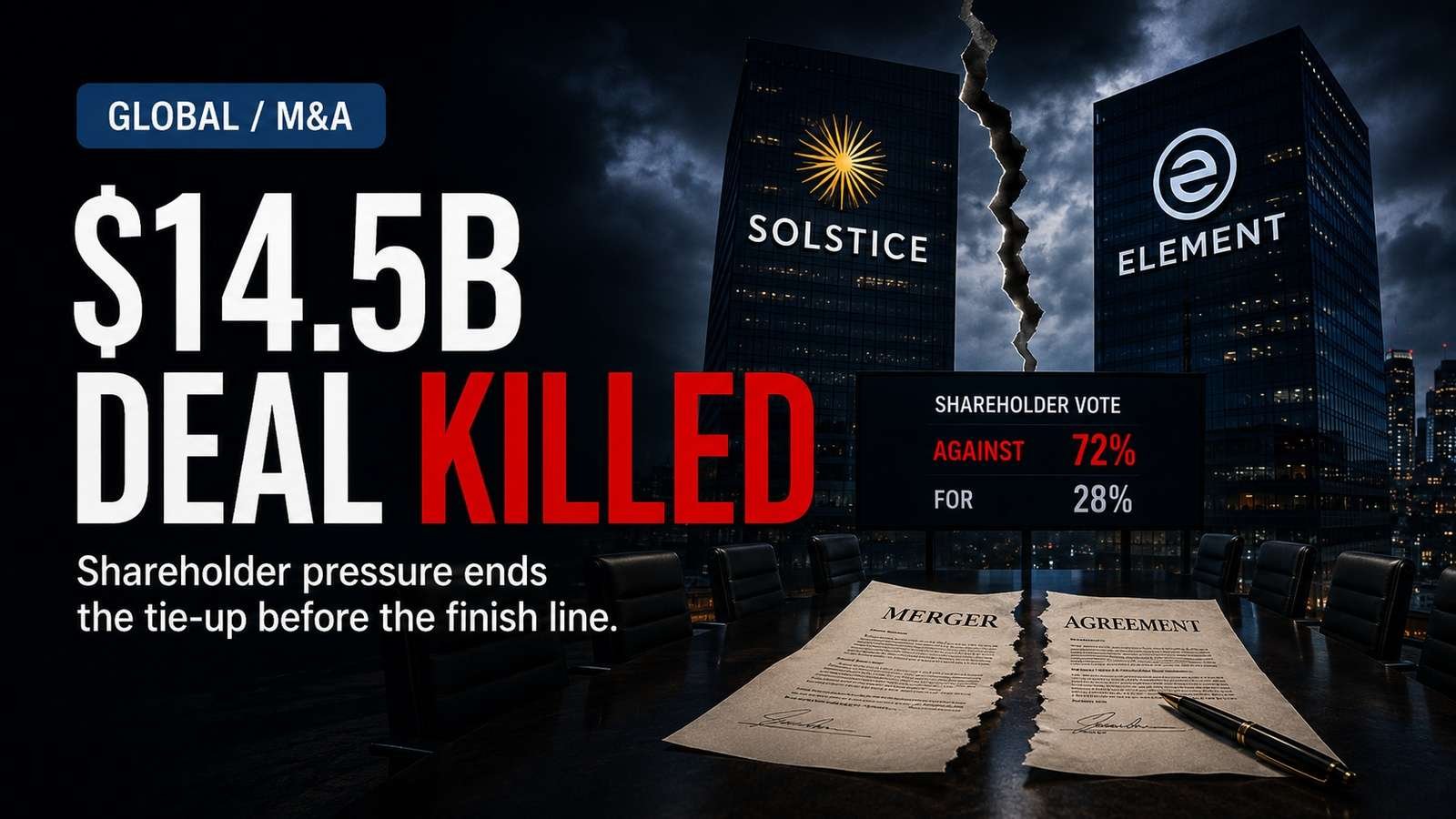
Solstice Advanced Materials and Element Solutions have cancelled a $14.5 billion merger that was designed to create a larger specialty-materials supplier to semiconductor and AI infrastructure markets.
The reversal came after shareholder feedback. Solstice then authorised a $500 million buyback, and its shares jumped sharply. The reaction is a useful reminder that a strategically logical AI deal can still destroy perceived value if investors dislike price, leverage or integration risk.
WHAT HAPPENED
The companies announced the acquisition in July and expected the combined group to deepen exposure to electronics, semiconductor fabrication, packaging and data-centre thermal management.
On August 27, both boards agreed to terminate the transaction. Solstice said no termination fees are payable and reaffirmed its financial guidance while announcing the new repurchase programme.
WHAT EVERYONE IS WATCHING
The immediate question is whether either company seeks another transaction.
The better signal is the market’s response to independence. A rally after a deal dies implies investors believed the merger’s expected synergies were worth less than the financial or execution burden required to capture them.
WHAT THE MARKET MAY BE MISSING
AI enthusiasm has inflated the strategic value of anything tied to chips, cooling and advanced materials. That makes boards more willing to pay for exposure — but also makes shareholders more sensitive to overpaying.
This could become a discipline mechanism across the AI supply chain: “strategic fit” will not excuse weak deal economics.
THE NUMBERS
• Cancelled transaction value: about $14.5 billion including assumed net debt • Original announcement: July 2026 • Termination: August 27 • Termination fees: none • New Solstice buyback: $500 million • Reuters reported Solstice shares up about 15% after the cancellation announcement
POSITIVE CASE
Remaining independent preserves balance-sheet flexibility and lets each company focus on organic growth in strong electronics and AI-linked end markets.
DOWNSIDE CASE
The merger may have contained real industrial synergies that are now lost. A future slowdown could make the rejected scale benefits look more valuable in hindsight.
WHAT WOULD CHANGE THE STORY
Capital-allocation plans, buyback execution, standalone growth, margins and any future M&A will reveal whether shareholders were right to prefer independence.
RELATED THEMES
Semiconductor materials, AI infrastructure, specialty chemicals, Solstice, Element Solutions, corporate governance and M&A valuation.
PRICEVIA VIEW
The most revealing number is not $14.5 billion. It is the share-price reaction after the deal disappeared. Markets sometimes tell boards that doing less is worth more.
SOURCES & TIMESTAMP
Solstice official termination release, SEC filing and Reuters reporting dated August 27–28, accessed August 29, 2026 IST.
MARKET-RISK DISCLAIMER
For information and education only; not investment advice. Markets, regulatory decisions and transaction terms can change, and investors should verify time-sensitive information before acting.
Related PriceVia analysis
BRICS Wants to Rewrite Global Finance — Payments Are the First Real Test
Finance ministers demanded a bigger emerging-market voice and faster, cheaper cross-border payments; turning a joint statement into interoperable infrastructure is the harder step.
ByteDance Borrowed $29.6 Billion Without Collateral — Nearly 30 Banks Wanted In
The three-year facility grew from a $20 billion target after overwhelming lender demand, with Chinese banks providing more than 60% and overseas AI infrastructure absorbing much of the capital.
One Refinery, a $47 Billion Valuation: Africa’s Biggest IPO Faces Its Hardest Question
Nigeria approved a 4.1-billion-share offer that could raise $1.63 billion, but the implied valuation towers over listed refining peers while detailed financial statements remain limited.
GoPro Lost 96% — Now a $285 Million Deal Is Sending It From Cameras to Defense and AI
Starman Optical will own about 90% of the combined listed company, repay GoPro’s $92 million debt and try to monetise more than 2,500 US patents beyond consumer action cameras.