Soitec Is Asking AI-Wafer Customers for Deposits — The Bottleneck Is Moving Beneath the Chips
The contracts offer demand visibility, but they also reveal why optical connectivity and specialised substrates may become the next AI infrastructure constraint.
What happened
Soitec is locking in multi-year customer agreements for silicon-photonics wafers used in high-speed optical connections inside AI data centres. Reuters reported that the contracts include deposits, committed volumes and penalties when customers fall short. Management expects roughly 80% of the targeted agreements to be completed shortly. [S1]
The company expects revenue from photonics-SOI to more than double this financial year and exceed $200 million. Its July update had already shown the direction: Q1 FY27 group revenue reached €113 million, up 23% year on year at constant currency and scope, with photonics-SOI sales doubling. [S1, S2, S3]
What everyone is watching
AI infrastructure spending is usually discussed through processors and memory. But faster clusters also need to move enormous amounts of data between machines. Optical links can carry that traffic with better reach and power characteristics than copper in demanding applications.
That shifts attention to specialised substrate makers. Soitec’s wafers sit upstream of the transceivers and optical systems that connect servers, making demand less visible to end users but important to deployment speed.
The PriceVia angle
PriceVia analysis: customer deposits are both a confidence signal and a risk-allocation tool. They make customers share the cost of reserving scarce capacity and reduce the chance that Soitec expands for demand that later disappears.
Volume commitments and penalties improve visibility, but they can also concentrate expectations into a small number of large buyers. If AI customers change architecture, delay data centres or negotiate aggressively, a multi-year contract does not remove all margin risk.
Soitec plans to increase output through underused facilities, added cleanroom tools and an existing Singapore building before considering a new fabrication plant. That approach limits immediate capital intensity, but operational execution becomes the constraint.
Positive scenario
If silicon photonics becomes the standard connection layer for larger AI clusters, Soitec can grow by using existing infrastructure more intensively. Deposits and commitments can finance capacity preparation while protecting returns.
Risk scenario
A concentrated customer base, alternative technologies or slower AI capex could leave committed capacity underused. Rapid expansion can also introduce yield, qualification and delivery challenges even without building a new fab.
What would change the story
Signed-contract coverage, customer deposits, production yield and photonics-SOI revenue will test the thesis. The need for a new fab before 2029 would indicate demand is stronger — but would also raise the capital requirement.
Related stocks and themes
Soitec, silicon photonics, optical transceivers, AI data centres, semiconductor materials and capacity reservations.
Sources and timestamps
Source links and original publication times are provided in the source list attached to this article. All sources were checked at 2026-08-31T18:53:02+05:30.
Visual disclosure
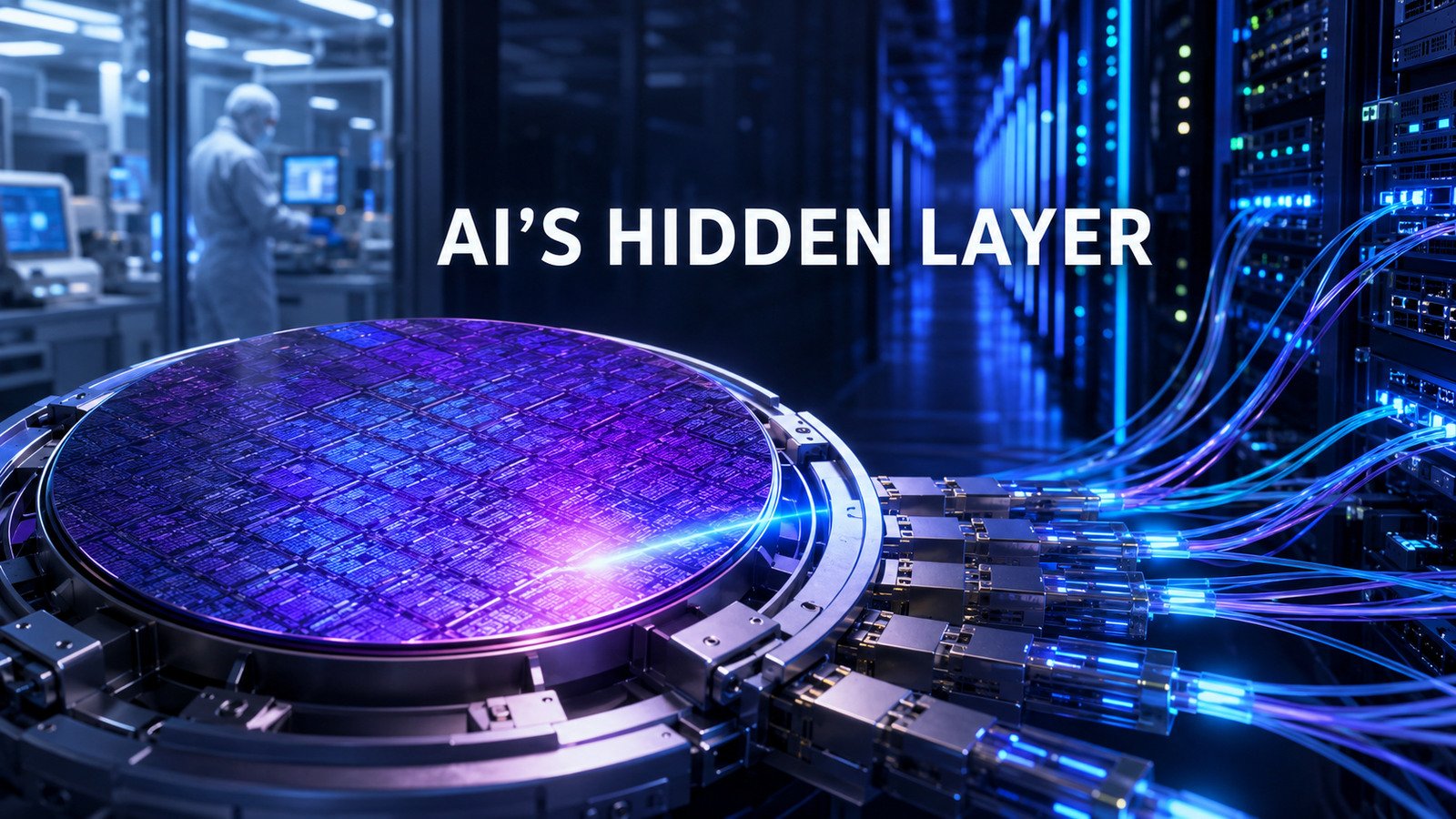
The hero is an AI-generated editorial illustration made for this story. It is not a market-data screenshot or a photograph of the actual event.
Market-risk disclaimer
For information and education only; not investment advice or a recommendation to buy, sell or subscribe. Market prices, transaction terms and regulatory outcomes can change. Verify current official disclosures before making decisions.
- Final share of multi-year agreements signed
- Photonics-SOI revenue and production yield
- Singapore capacity utilisation and capital spending
Risk context: Management targets and unsigned customer agreements are forward-looking; deposits and commitments do not eliminate demand or execution risk.
- S1 — Reuters: Soitec locks in AI-wafer customers2026-08-31
- S2 — Soitec: Q1 FY27 regulated release2026-07-22
- S3 — Soitec Q1 FY27 release mirror2026-07-22T11:51:00-04:00
Related PriceVia analysis
Shein Traded More Than 10% Below Its $1.7 Billion IPO Before Debut — The Warning Is About Demand, Not Fashion
The pre-debut market is unofficial and can be thin, but the discount challenges the price discovery behind one of 2026’s largest consumer listings.
The FSB Calls Frontier AI an Immediate Financial Risk — Shared Providers Are the Hidden Weak Point
The danger is not one clever attack; it is simultaneous disruption across institutions that depend on the same models, cloud systems and recovery stack.

Cronos Halted an Entire Blockchain After a $75 Million Estimate — The Governance Trade-Off Is the Bigger Story
Most of the estimated assets reportedly remained on Cronos, but stopping every user to contain one protocol exposes a difficult security trade-off.
Marine Electricals Won ₹398.81 Crore of Orders — But Investors Still Don’t Know the Split
Two customers and two execution windows sit behind one combined number, leaving concentration, billing and working-capital questions unanswered.