GM Is Putting C$1.1 Billion Into Canada While Tariffs Rise — That Contradiction Is the Story
A new labour agreement keeps major Canadian auto investment alive even as U.S. tariffs make the economics of cross-border production less predictable.
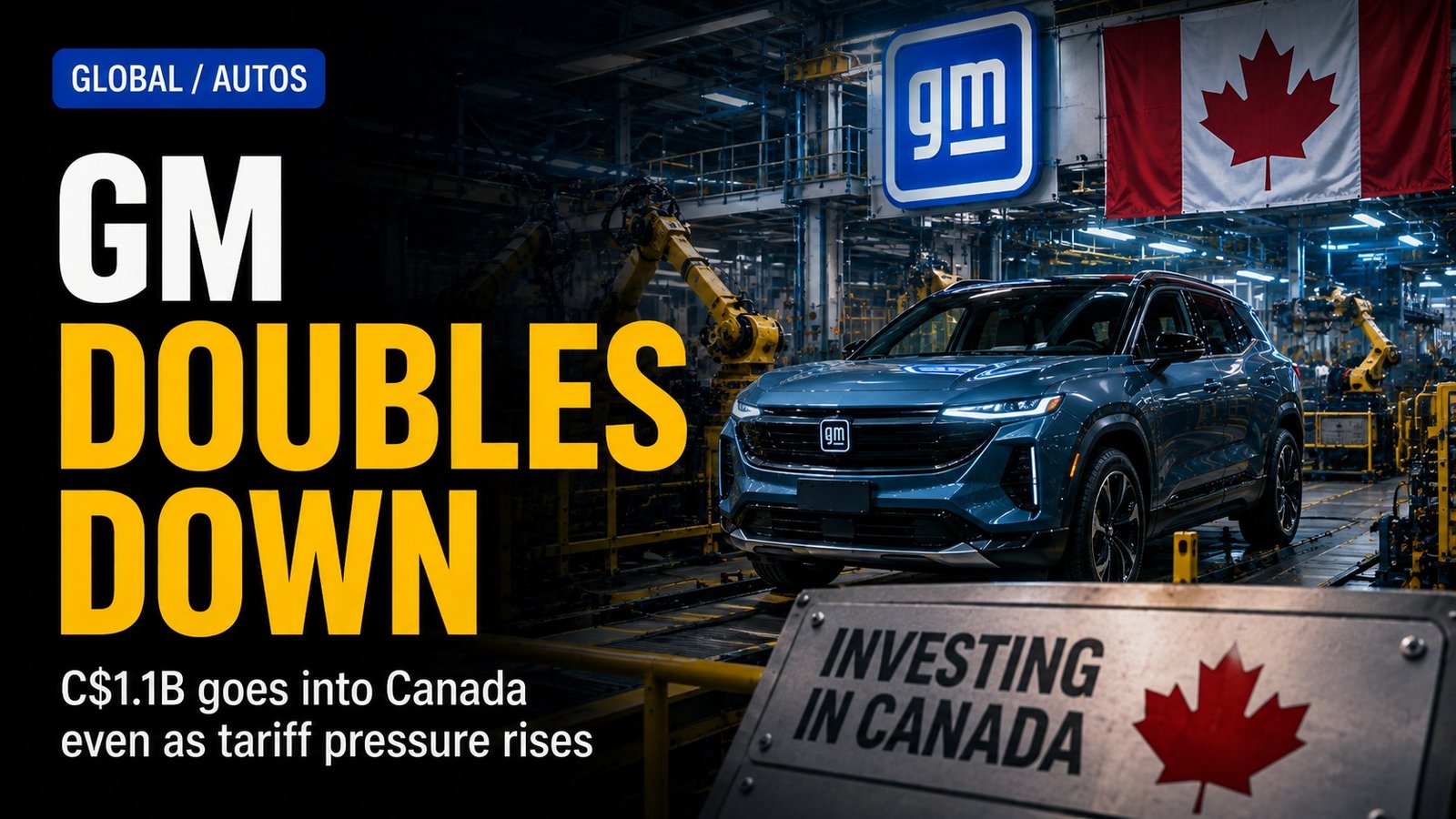
General Motors and Unifor have reached a tentative agreement that would bring roughly C$1.1 billion of investment into Canadian auto facilities while the sector faces some of the harshest U.S. tariff pressure in years.
The contradiction is what makes the story valuable. Companies normally delay capital commitments when trade rules are unstable. GM is doing the opposite — but much of the spending is tied to plants whose economics still depend heavily on access to the U.S. market.
WHAT HAPPENED
Reuters reported that the agreement includes C$144 million for next-generation heavy-duty GMC Sierra assembly in Oshawa and C$215 million for a new transmission line in St. Catharines, alongside a previously announced C$691 million investment in V8 engine production.
Unifor says the tentative agreements cover more than 4,600 members across Oshawa, CAMI, St. Catharines and Woodstock. Members are voting at ratification meetings this weekend.
WHAT EVERYONE IS WATCHING
Investors will watch whether workers ratify the deal and whether the new production commitments proceed on schedule.
The bigger variable is trade policy. Canadian autos currently face a 25% U.S. tariff, and the threat of even higher rates creates a direct uncertainty around the return on capital invested in cross-border production.
WHAT THE MARKET MAY BE MISSING
The investments suggest GM still sees strategic value in Canadian capacity despite the tariff environment.
That matters because supply chains cannot be relocated as quickly as tariffs can be announced. Skilled labour, tooling, supplier ecosystems and existing plants create economic inertia. The real contest is whether tariff policy lasts long enough to overpower those advantages.
THE NUMBERS
• Investment package cited by Reuters: about C$1.1 billion • Oshawa next-generation heavy-duty Sierra: C$144 million • St. Catharines transmission line: C$215 million • Previously announced V8 investment: C$691 million • Workers covered by Unifor agreements: more than 4,600
POSITIVE CASE
Tariff negotiations improve, the labour deal is ratified and Canadian plants secure long-duration product allocation. The investments could then reinforce a highly integrated North American supply chain.
DOWNSIDE CASE
Tariffs rise or persist long enough to change vehicle economics, forcing production reallocation or reducing utilisation. Large sunk investments would make adjustment costly.
WHAT WOULD CHANGE THE STORY
Worker ratification, U.S.-Canada trade negotiations, product-allocation decisions and plant utilisation will determine whether the C$1.1 billion becomes a vote of confidence or a stranded-cost risk.
RELATED THEMES
General Motors, Canadian autos, U.S. tariffs, Unifor, Oshawa, cross-border supply chains and industrial policy.
PRICEVIA VIEW
The headline is investment. The signal is that GM is willing to commit capital before trade uncertainty is resolved. That makes future tariff policy unusually important to the value of the spending.
SOURCES & TIMESTAMP
Reuters August 29 report and Unifor’s official tentative-agreement announcement, accessed August 30, 2026 IST.
MARKET-RISK DISCLAIMER
For information and education only; not investment advice. Markets, regulatory outcomes, transaction terms and company guidance can change. Time-sensitive facts should be rechecked before acting.
Related PriceVia analysis

BRICS Wants to Rewrite Global Finance — Payments Are the First Real Test
Finance ministers demanded a bigger emerging-market voice and faster, cheaper cross-border payments; turning a joint statement into interoperable infrastructure is the harder step.
ByteDance Borrowed $29.6 Billion Without Collateral — Nearly 30 Banks Wanted In
The three-year facility grew from a $20 billion target after overwhelming lender demand, with Chinese banks providing more than 60% and overseas AI infrastructure absorbing much of the capital.
One Refinery, a $47 Billion Valuation: Africa’s Biggest IPO Faces Its Hardest Question
Nigeria approved a 4.1-billion-share offer that could raise $1.63 billion, but the implied valuation towers over listed refining peers while detailed financial statements remain limited.
GoPro Lost 96% — Now a $285 Million Deal Is Sending It From Cameras to Defense and AI
Starman Optical will own about 90% of the combined listed company, repay GoPro’s $92 million debt and try to monetise more than 2,500 US patents beyond consumer action cameras.