A $1.8 Billion Iran Network Put Banque Misr UAE’s Dollar Access at Risk — Banks Everywhere Will Notice
FinCEN is proposing to cut the UAE branches of a major Egyptian bank off from U.S. correspondent access, showing how sanctions enforcement can reach institutions that are not themselves Iranian.
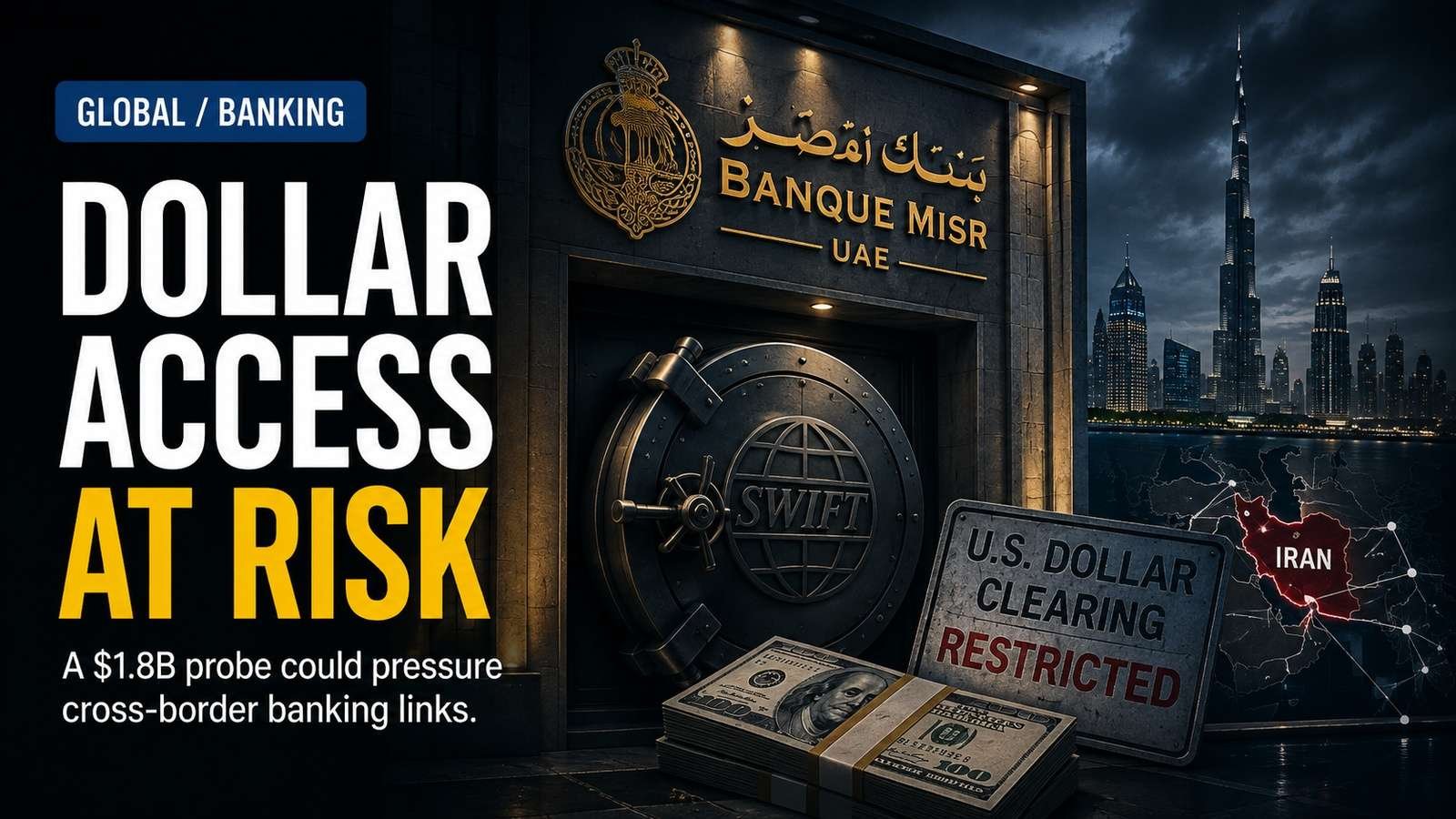
The U.S. Treasury is testing a powerful pressure point in the global banking system: access to dollar correspondent accounts. FinCEN has proposed a rule that would revoke Banque Misr UAE’s correspondent-banking access to U.S. financial institutions after identifying the branches as a primary money-laundering concern.
Treasury estimates that the UAE operations processed about $1.8 billion for 103 companies potentially linked to Iranian shadow-banking networks between January 2024 and June 2026. The action applies to Banque Misr UAE — not the bank’s entire global network.
WHAT HAPPENED
FinCEN’s proposed special measure would prohibit U.S. financial institutions from opening or maintaining correspondent accounts for Banque Misr UAE and require due diligence to prevent indirect processing through other foreign banks.
Treasury also announced separate sanctions on a Bank Melli Dubai manager and a Hong Kong-based company it says supported Iranian laundering activity.
WHAT EVERYONE IS WATCHING
The immediate focus is whether the proposed rule becomes final after the comment period.
The wider banking issue is de-risking. Even a narrowly targeted action can cause counterparties to reassess relationships with parent entities, affiliates and customers that touch higher-risk trade corridors.
WHAT THE MARKET MAY BE MISSING
Dollar access is a form of infrastructure. A bank does not need to be formally sanctioned across its entire group to face serious commercial consequences if counterparties fear that transactions may become costly or legally risky.
That can make enforcement disproportionately powerful relative to the size of the targeted branch.
THE NUMBERS
• Suspected flows cited by Treasury: about $1.8 billion • Potentially linked companies: 103 • Period: January 2024 to June 2026 • Action: proposed revocation of U.S. correspondent access • Scope: Banque Misr UAE only, not operations in other countries
POSITIVE CASE
A narrow, clearly defined rule can isolate the targeted activity without destabilising the wider Egyptian banking system. Strong remediation could preserve normal relationships elsewhere.
DOWNSIDE CASE
Counterparties may over-compliance, restricting transactions beyond the legal scope. That could raise funding and remittance friction and create reputational spillover for the broader group.
WHAT WOULD CHANGE THE STORY
The final FinCEN rule, any Banque Misr remediation, Egyptian central-bank response and signs of wider sanctions enforcement against other intermediary banks will determine market consequences.
RELATED THEMES
Dollar clearing, Egypt, UAE banking, Iran sanctions, correspondent banking, AML, trade finance and geopolitical risk.
PRICEVIA VIEW
Sanctions headlines focus on the target country. The market mechanism often sits inside neutral financial plumbing. This action shows that access to dollars can be the enforcement weapon itself.
SOURCES & TIMESTAMP
U.S. Treasury and FinCEN official releases dated August 28, cross-checked with Reuters regional sanctions reporting, accessed August 29, 2026 IST.
MARKET-RISK DISCLAIMER
For information and education only; not investment advice. Markets, regulatory decisions and transaction terms can change, and investors should verify time-sensitive information before acting.
Related PriceVia analysis

BRICS Wants to Rewrite Global Finance — Payments Are the First Real Test
Finance ministers demanded a bigger emerging-market voice and faster, cheaper cross-border payments; turning a joint statement into interoperable infrastructure is the harder step.

ByteDance Borrowed $29.6 Billion Without Collateral — Nearly 30 Banks Wanted In
The three-year facility grew from a $20 billion target after overwhelming lender demand, with Chinese banks providing more than 60% and overseas AI infrastructure absorbing much of the capital.

One Refinery, a $47 Billion Valuation: Africa’s Biggest IPO Faces Its Hardest Question
Nigeria approved a 4.1-billion-share offer that could raise $1.63 billion, but the implied valuation towers over listed refining peers while detailed financial statements remain limited.

GoPro Lost 96% — Now a $285 Million Deal Is Sending It From Cameras to Defense and AI
Starman Optical will own about 90% of the combined listed company, repay GoPro’s $92 million debt and try to monetise more than 2,500 US patents beyond consumer action cameras.